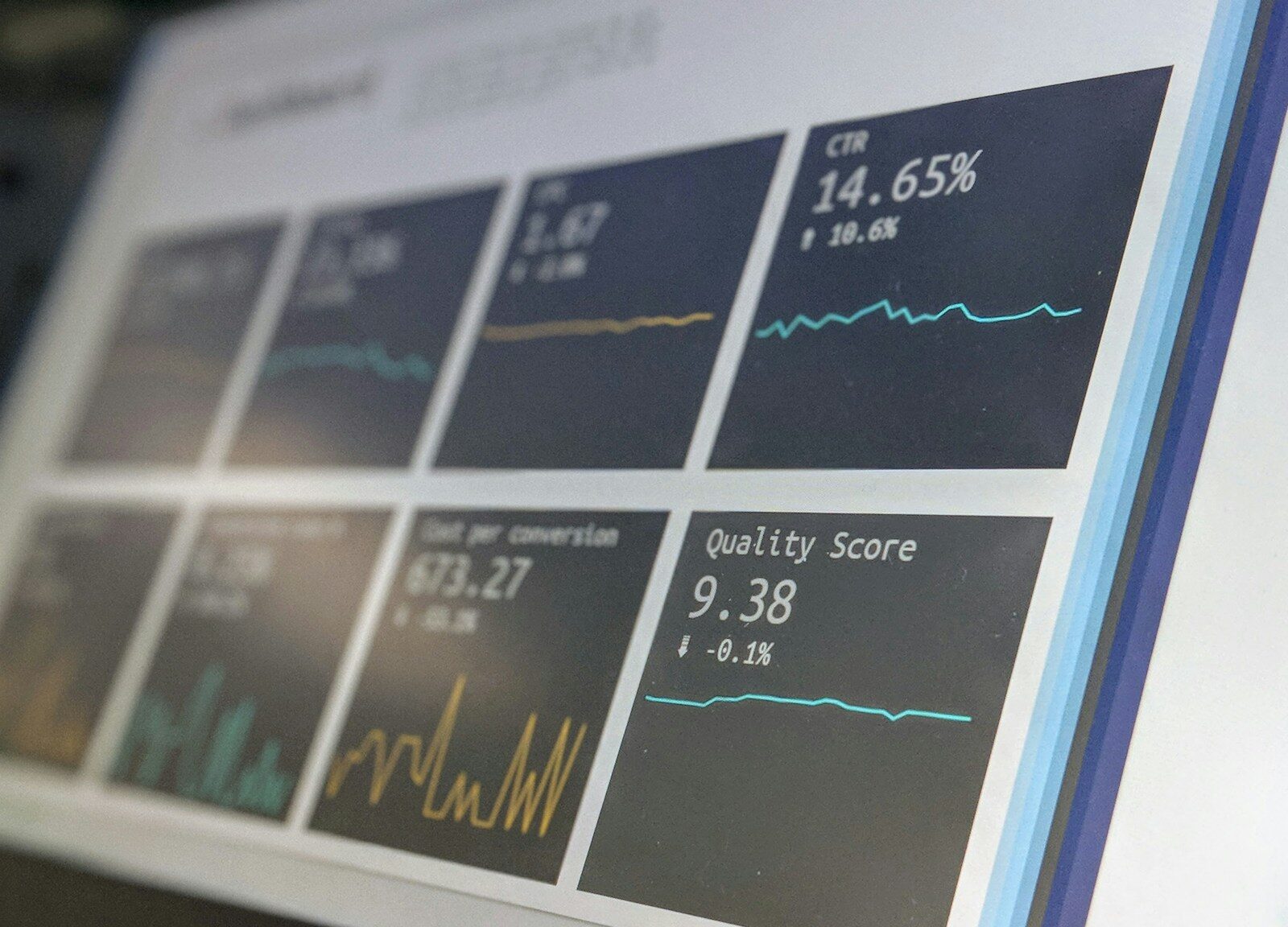
Most marketing reports are full of numbers. Impressions up 34%. Followers grew by 200 this month. Reach hit a new high. The slides look good. Nobody can tell you whether any of it moved the business forward.
This is the vanity metric trap — and it’s endemic in marketing. Not because marketers are careless, but because the numbers that are easiest to track are rarely the ones that matter most. Dashboards fill up with data that feels like progress without confirming it.
Here’s a practical framework for setting KPIs that actually connect to business outcomes — and dropping the ones that don’t.
The Vanity Metric Trap
A vanity metric is any number that looks good in a report but doesn’t inform a decision or connect to revenue.
Follower counts. Total impressions. Page views without context. Video views. These numbers tend to go up over time regardless of whether your marketing is working. They create a comfortable illusion of momentum — and they’re the first thing people point to when asked how marketing is performing.
The test for a vanity metric is simple: if the number went up this month, what would you do differently? If the answer is nothing — if it doesn’t change your next action — it’s not a useful KPI. It’s a number for the sake of having a number.
This doesn’t mean these metrics are completely worthless. Reach matters for brand awareness. Impressions give context to engagement rates. But they shouldn’t sit at the top of your reporting stack as primary measures of success.
What a Good KPI Actually Looks Like
A useful KPI has two characteristics. It’s measurable without excessive effort, and it connects — directly or indirectly — to a business outcome you care about.
The SMART framework is worth a brief mention: Specific, Measurable, Achievable, Relevant, Time-bound. It’s been repeated so often it’s become wallpaper, but the underlying logic is sound. A KPI without a target and a timeframe is just a metric you’re watching. A KPI with both is something you’re accountable to.
The practical test is this: can you answer “so what?” with a clear action? If organic traffic drops 15% month on month, you know to investigate — content quality, technical issues, ranking changes. If followers drop 15%, what do you actually do? The first metric drives decisions. The second mostly drives anxiety.
Build your KPI stack around metrics that answer “so what?” with something concrete.
The Marketing Funnel — and Which Metrics Belong Where
Different metrics are useful at different stages. Trying to measure awareness with conversion metrics, or conversion with awareness metrics, produces confusion. Map your KPIs to the funnel stage they actually reflect.
Awareness — are you reaching the right people?
Useful: organic search traffic, share of voice for target keywords, social reach among your target audience demographic. Skip: raw follower counts, total impressions without audience quality filter, vanity PR mentions with no relevance to your buyer.
Engagement — is the content resonating?
Useful: time on page, email open rate, click-through rate on emails and ads, returning visitors. Skip: likes and reactions in isolation, video views without watch time context, comment counts without sentiment.
Conversion — are interested people becoming leads or customers?
Useful: lead-to-customer conversion rate, cost per qualified lead, landing page conversion rate, form completion rate. Skip: total form submissions without lead quality filter, click volume without conversion tracking downstream.
Retention — are customers staying and coming back?
Useful: repeat purchase rate or contract renewal rate, email list churn, Net Promoter Score or equivalent satisfaction signal. Skip: social media re-engagement metrics as a proxy for customer satisfaction — they’re not the same thing.
Pick one or two metrics per funnel stage. More than that and nothing gets the attention it deserves.
How Many KPIs Should You Actually Track?
There is an inverse relationship between the number of KPIs on a dashboard and the likelihood that any of them drive meaningful action.
For a small business or lean marketing team, three to five KPIs per quarter is the right range. Enough to cover the key stages of your funnel. Few enough that each one gets scrutinised properly rather than scrolled past.
A useful exercise: if you could only look at three numbers to assess whether your marketing was working, what would they be? Whatever you answer is probably your actual KPI stack. Everything else is context.
For most service businesses, that core stack looks something like: organic traffic growth, inbound lead volume, and lead-to-client conversion rate. Three numbers that, between them, tell you whether people are finding you, whether they’re raising their hand, and whether your sales process is working.
How to Set Targets That Mean Something
Benchmarks from industry reports are a starting point, not a standard. Average email open rates, typical landing page conversion rates, benchmark cost per lead — these numbers exist, but they’re averages across industries, business sizes, and audience types that may have nothing in common with yours.
The most reliable target-setting method is your own historical data.
Take your baseline — what the metric looks like right now, or over the last three months. Set a target of 10–20% improvement over the next quarter. Review at the end of the quarter, adjust based on what you learned, and reset.
If you have no historical data because you’re starting from scratch, spend the first quarter establishing a baseline. Don’t invent targets you have no evidence for. Track the metrics, let the data accumulate, then set targets from an informed position.
One additional principle: set targets you can influence. Organic traffic is partially within your control — publish more, improve quality, build links. Brand search volume is harder to influence directly. KPIs should connect to actions you can actually take.
A Simple Monthly Reporting Rhythm
A reporting process that takes three hours to compile will gradually stop happening. Keep it lightweight enough that it actually gets done.
A useful monthly review covers four things: what the key metrics did, why they moved the way they did, what you’re doing next as a result, and whether your targets for the quarter are still realistic.
That’s a thirty-minute conversation or a one-page document. Not a sixty-slide deck.
For the dashboard itself, a simple spreadsheet tracking your three to five KPIs month on month, with a column for notes on what changed, is sufficient for most small businesses. You don’t need expensive reporting software to answer the question: is our marketing working?
The goal of reporting isn’t to demonstrate activity. It’s to make better decisions. Design your reporting process around that goal and it stays useful rather than becoming a ritual nobody learns from.
The Bottom Line
Measuring more doesn’t mean understanding more. The businesses with the clearest view of their marketing performance aren’t tracking the most metrics — they’re tracking the right ones, consistently, and actually using them to decide what to do next.
Audit your current KPIs against one question: does this number change what we do? Cut everything that doesn’t. Replace it with a metric one step closer to revenue.
Do that quarterly, and your marketing reporting stops being a recap of what happened and starts being a tool for making it happen faster.